THE LONG NEGLECT
For so long, the United States pretended to have very little involvement in the Western Hemisphere’s affairs. The Biden administration once called it the backyard and even front yard of the United States. During Trump’s first term, foreign policy focused heavily on the Middle East, the embassy move to Jerusalem, and strategic rivalry with China. Engagement with Latin America remained limited almost exclusively to trade disputes and border leverage with Mexico.
However, since appointing Secretary of State Marco Rubio, US policy, involvement, and relations have taken a drastic turn. The last time the United States was this heavily involved in the affairs of Latin America was under President Ronald Reagan, with his pragmatic alignment with right-wing anti-communist regimes. The secretaries of State during his tenure were Alexander Haig (1981-1982) and George P. Shultz (1982-1989).
How deep was U.S. involvement during this era? The US took direct actions that included the heavy funding of the Contras in Nicaragua, extensive military aid to El Salvador, and the 1983 invasion of Grenada.
Ever since, US direct involvement in the region has been minimal for quite some time. The major focus shifted to the Middle East and China. Without US involvement, Daniel Ortega cemented his dictatorship; cartels have taken over Mexico; the progressive left-communist agenda promoting abortion and LGBTQ has advanced significantly; Hugo Chávez and Fidel Castro reigned in Venezuela and Cuba until their deaths; and China’s influence and direct relationships with several countries have taken hold. All of this happened under the watch of the United States, but with inaction.
The Biden administration at one point was hostile towards President Bukele; the ideological friction and diplomatic pressure over President Nayib Bukele’s anti-gang tactics alienated San Salvador. This pushed El Salvador into a new and closer relationship with the People’s Republic of China; Washington’s hostility created an immediate opening for Beijing, which moved in with hundreds of millions in non-refundable infrastructure grants, funding flagship projects like the national library, a new stadium, and water treatment facilities.
By attempting to isolate Bukele, U.S. policy explicitly pushed El Salvador into China’s strategic orbit, which has brought a lot of benefit to the people of El Salvador.
Enter Marco Rubio
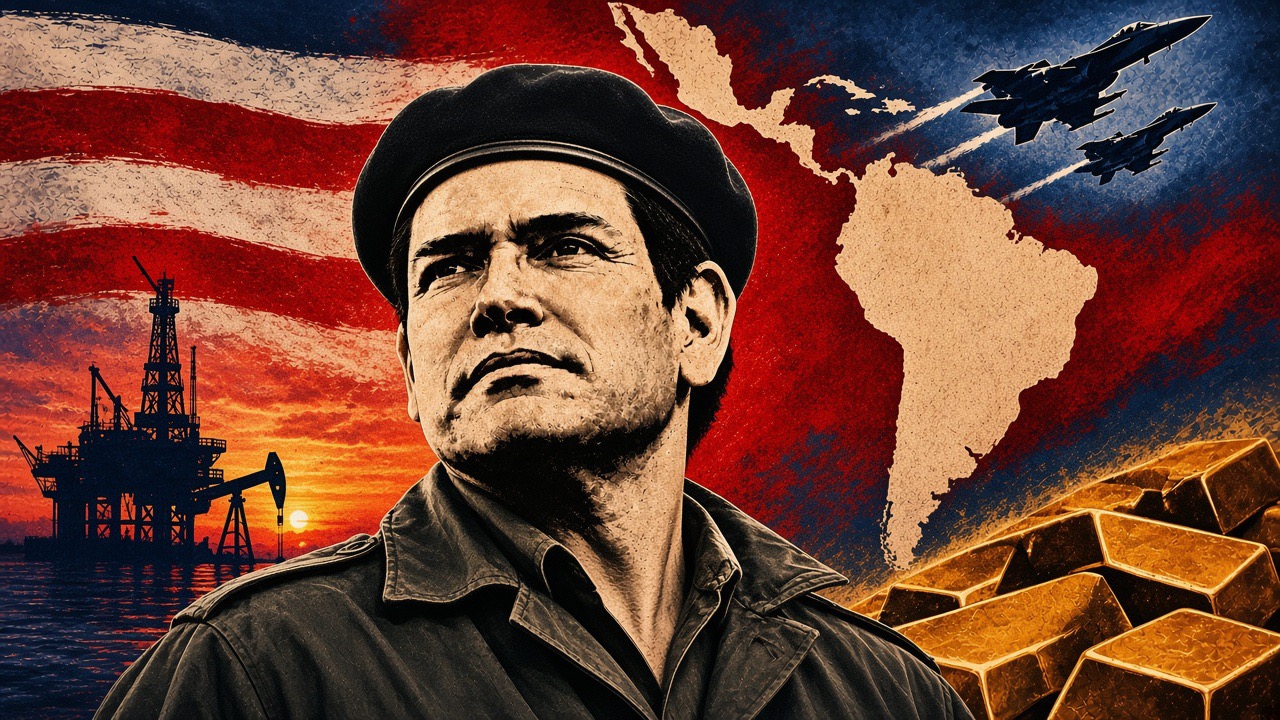
For the new Secretary of State, Latin America is not just another region. He is the first Latin American and of Cuban descent to hold the office of Secretary of State of the United States. His influence over foreign policy has shaped the view and agenda of President Trump. Latin American countries are no longer the backyard; they are the focus of this administration. This is demonstrated by creating the Shield of the Americas and the direct military intervention in Venezuela to remove Maduro.
Venezuela, following the U.S. intervention in early 2026 and the subsequent transition in Caracas, the framework for U.S. commercial presence and investment in Venezuela has undergone a massive restructuring. The push to bring U.S. investment into Venezuela relies on a newly structured framework centered around bilateral energy accords, high-concession joint ventures, and revenue oversight through managed Treasury accounts. Major American operators, including Chevron and GE Vernova, alongside oilfield service leaders Halliburton and SLB, are leading the effort to revitalize energy reserves and power infrastructure, while entities like ExxonMobil and ConocoPhillips work through legacy arbitration claims.
The US now seeks to control China-LATAM relationships. The United States wants to oversee and define the extent of relationships between Latin American countries and China. A clear example of this new posture was when the United States aggressively pressured Chile into canceling a Chinese-backed undersea internet cable connecting the country to Hong Kong by imposing visa sanctions on high-ranking Chilean officials in February 2026. The sale of Venezuelan oil to China has shifted dramatically following the removal of former Venezuelan President Nicolás Maduro, ending the prior era of heavily discounted “oil-for-debt” shipments.
The new era is pragmatism
Things are different now. El Salvador and the US have a working alliance where terrorists and hardened criminals get sent to CECOT, the country’s most secure jail. Secretary Rubio has already gone down to meet the newly elected president of Colombia, Abelardo de la Espriella. Mexico is being held accountable for the cartels; President Claudia Sheinbaum has transferred 92 cartel operatives and leaders straight into U.S. custody. And the crowning jewel: the administration has ramped up the six-decade embargo on Cuba with a strict naval and financial energy blockade meant to force change in the government.
The US will no longer choose to sit idly by and allow other countries to dictate the region’s trajectory.
Stick and Carrot
The Stick: The US came to the scene with the stick, showcasing its power in the region and ability to move independently from other countries. Venezuela was the painting, and the message was clear to the region. The message was: We will remove you if you don’t cooperate.
The carrot: direct financial investment, deeper diplomatic ties, high-level Washington access, bilateral cooperation, and targeted economic stimulus.
WHY THIS APPROACH
This is not nostalgia for the Reagan years. It is a recognition that power vacuums get filled, either by the United States on its own terms, or by another superpower, cartels, and authoritarian regimes on theirs. The previous policy from both Democrats and Republicans of distant moral lectures and selective disengagement did not produce a freer or more stable hemisphere. It produced the opposite. The current approach is harder and may feel more transactional, but it is finally treating Latin America as a strategic space that matters rather than an afterthought.
MY PREDICTION
1. Cuba will have regime change.
2. Lula’s Brazil will change to become a pro-America Bolsonaro government.
3. Mexico will continue to allow US military operations in the country.
4. Nicaragua will soon become the focus of the administration.
Leave a Reply