The political future of Brazil is far more important than most of us realize.
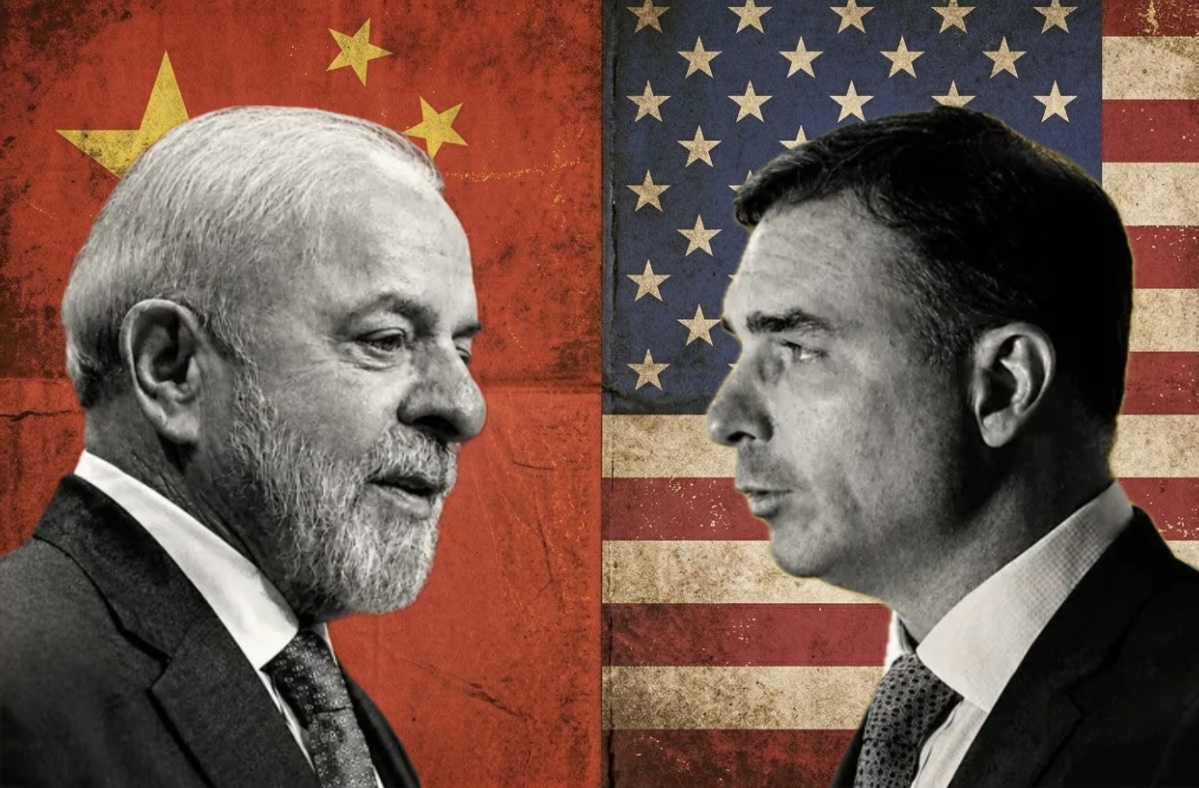
Bolsonaro and Lula represent two different sides that will shake the global order. The United States has put its chips on Bolsonaro. Beijing is paying attention to Brazil’s election more than ever, their future depends on it.

Today’s Election
This is the election that will help define U.S. hegemony over the region. China’s most important Latin American strategic partner is at risk. So what is actually on the ballot for the two superpowers? Rare earths and critical minerals. Technology and AI. Energy. Telecommunications. The future of global dependence on the dollar. Parallel monetary systems. And partnership marriages like UnionPay.
Two distinct futures, not only for Brazil, but for the rest of the world. Two candidates who represent polar opposite views, partnerships, ideas, and trajectories.
The Candidates
Flávio Bolsonaro, son of former president Jair Bolsonaro, is a lawyer, politician, and businessman currently serving as Federal Senator for Rio de Janeiro. He is running as the Liberal Party (PL) candidate in the October 2026 presidential election.
Luiz Inácio Lula da Silva, known universally as Lula, is the current president of Brazil. A towering figure in Latin American politics, he governed from 2003 to 2010 and returned to power in 2023 after defeating Jair Bolsonaro, Flávio’s father, in a highly polarized election.
We could dig into their domestic politics, but that misses the larger point. What matters most is their global impact, strategic partnerships, and what each one means for the world order.
BRICS
Bolsonaro will reconsider Brazil’s place in BRICS and look more favorably at Western-led organizations like the OECD (Organization for Economic Co-operation and Development).
For Lula, the BRICS alliance remains the cornerstone of his foreign policy. His goal is a multipolar world that reduces dependence on Western economic dominance.
China
Beijing’s preferred candidate is undoubtedly Lula. Yet China is fundamentally pragmatic: its primary commitment is to its own strategic interests, and it is prepared to work with a Bolsonaro administration if necessary. What is at stake goes far beyond local right-versus-left politics. For China, this election affects its ability to compete with and eventually overtake the United States. The outcome directly impacts its supply-chain security and global economic posture.
Beijing’s primary concerns with a Flávio Bolsonaro presidency are clear: his opposition to integrating Chinese monetary infrastructure such as UnionPay, his proposal to downgrade Beijing from strategic partner to strictly commercial partner, and the prospect of critical mineral supply chains being rerouted toward Washington.
Bolsonaro on China
Bolsonaro advocates an “economically pragmatic” approach to China, promising to preserve vital commercial trade while downgrading Beijing’s status as a strategic partner. His position is crafted to fit his deep ideological alignment with the United States, and he is willing to draw red lines around national security matters. Flávio has publicly slammed the existing trade dynamic with Beijing, arguing that Brazil has become overly dependent on exporting raw materials while importing finished tech products. He has called for a major overhaul of Brazil’s policy on its massive rare earth reserves. Reports indicate he has floated proposals to U.S.-based Rockbridge Network to redirect critical mineral supply chains away from Beijing and toward Washington in exchange for geopolitical alignment. He has also vowed to block integration between Brazilian and Chinese state transactional or digital financial infrastructure, and to cap Chinese ownership of strategically vital domestic assets.
Lula on China
Lula views China not as an ideological master, but as an indispensable strategic partner and counterweight to Western influence. Under his doctrine of “active non-alignment,” he has actively deepened economic, technological, and diplomatic ties with Beijing, inviting massive Chinese investment in infrastructure, local manufacturing, and green energy. His goal is not submission to Beijing; it is geopolitical leverage. By promoting BRICS financial integration and local-currency trade, Lula aims to secure Brazil’s strategic autonomy, using China’s economic footprint to ensure Brasília never has to rely solely on Washington or Brussels to drive its global agenda.
USA
Washington has picked sides. Bolsonaro is their man. They see a figure who can help halt Chinese expansion in Latin America, fracture the cohesion of the BRICS bloc, and secure vital minerals for the global AI race. The upside they offer Brazil is direct investment, key security partnerships, and deeper integration with U.S. technology ecosystems.
Lula, by contrast, represents a deliberate challenge to American hegemony in the Western Hemisphere. He is a leader determined to institutionalize non-alignment and create financial alternatives to the dollar. That is why the betting horse is Bolsonaro.
The AI Race
The global race for artificial intelligence dominance depends heavily on rare earth minerals, energy capacity, and raw industrial hardware. This election directly affects Beijing’s position in that race.
Under Bolsonaro, Brazil’s mineral wealth would align more closely with American supply chains, accelerating Western AI development while restricting Beijing’s access to key South American inputs.
Under Lula, Brazil’s vast resources would remain accessible to Chinese tech conglomerates, strengthening Beijing’s long-term industrial base, supporting its bid for a stronger position in the global order, and providing a hedge against Western sanctions.
Losing Brazil’s structural support would severely fracture Beijing’s longer-term geopolitical ambitions.
Concluding Reflection
Today’s election will shake the global order. The true immediate victors will not simply be the voters in Brasília or São Paulo. The real winner will be either American hegemony or China’s vision of a multipolar world order.
Leave a Reply